
Catch and Kill
Help! My book is priced too high

I have a problem and need your help.
No, I am not enlisting you to go out agentic AI-like on my behalf to complete some unseemly task or mission.
Until now, I have never as an architect come across a problem that I cannot solve.
Especially with the help of others much smarter than myself.
It looks like I may have finally met my match.
My next book comes out in a couple months.
This one’s the best thing I’ve written, better than any of my 6 previous books including Superusers.
(There’s a reason book authors can’t blurb their own books.)
This next one is better. By far.
And the timing is perfect, too.
To write it, I took Toni Morrison’s famous advice:
“If there’s a book that you want to read, but it hasn’t been written yet, then you must write it.”
I couldn’t find the book I needed to read so I wrote it.
Now, it’s looking like – due to the publisher’s exorbitant pricing – I will be its only reader.
Even when books, new or used, are priced at $1.99 or discounted on Kindle double point days, there are impediments readers, authors and the publishing complex must overcome:
1. Lethargy.
Until the time when Elon implants chips in our brains, you actually have to read the thing (or have it read to you.)
2. Time.
Even on Audible played at 2X speed a good book can take hours.
3. Cost.
In other posts, I try to help you with numbers 1 and 2.
This last one is my current quandary. The one I need your assistance in solving.
My book is overpriced. In all formats.
And I don’t know what to do. Help.
I asked nicely
I was crushed when after submitting my latest manuscript in January to my UK publisher that they had priced all formats of my book out of reach to all but the Royal Family and sundry architecture libraries.
So, I did what any self-respecting book author would do. I wrote to my publisher and acquisition editor and pleaded my case.
One responded. It was not nothing.
But they wouldn’t or likely couldn’t budge.
That said, I am sure neither of them had ever spent what they are asking for my book on a book of their choosing.
And they are in publishing.
Yes, they get free books. They read for a living.
I would’ve gone into publishing myself, but I wanted to get rich quick, so I went instead into academia. (Ba da bum)
And cartooning, playwriting, painting, architecture… (How’s that going?)
But still, reading for pleasure, or outside their area of interest as is recommended for all of us to keep up and advance in these challenging times, I am almost certain neither of them has paid $200 for a hardcover book, or $52 for a paperback.
Trade paperbacks by comparison in 2026 typically command $15.99 to $22.99.
Or $52 for an e-Book. (Yikes!)
The Kindle/e-Book price. That is the author’s last vestige and saving grace.
Not anymore.
$52 is dramatically out of step with the consumer market. Digital books typically range from $0.99 to $14.99 (though of course you can pay more) and the sweet spot for nonfiction e-Books is $7.99 to $9.99.
Substacker and author Joel J Miller convincingly makes the case that no, books are not too expensive. But he is primarily focused on mainstream or mass market books
His recent book, The Idea Machine: How Books Built Our World and Shape Our Future, is a must read at $22.99 on Kindle.
And WaPo’s Ron Charles also made the important point about what a bargain books are.
To be clear, while the prices my publisher are asking are significantly above market norms for trade/professional nonfiction, they are not unheard of in a specific publishing category such as architecture + AI + human agency (currently a category of none and hopefully soon, one.)
Yes, they argue, architects tend to read physical books (“print is still dominant over digital in architecture.”)
I’ve been told I write discursively and would have never made it in publishing because I can’t pen terse phraseology like the quote above. True that.
But I argue it pays to be discursive since we get paid by the word (don’t worry, what you are reading is still free.)
I have always believed that I benefitted from having the e-Book version of my books being discounted has helped move books along, getting them into the hands and before eyes of readers.
I believe those days may be over.
Ugh
$52.
I know I have never spent that much for an e-Book. This is what I explained to them.
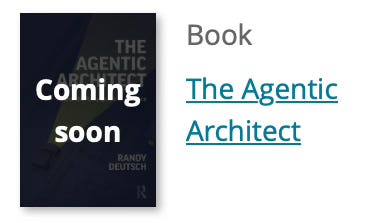
So, I wrote to them concerning the price point of my upcoming title: The Agentic Architect: AI and the Resurgence of Practice (Routledge, July 2026)
As an architect and fulltime academic who reads 4-5 hours/day, I am the perfect target for my own book. (See Toni Morrison quote above.)
A few things about me. Like you, I have an annual book budget of $3000.
Which (like you) I have exceeded every year for 25 years.
Seriously, as a university professor, public speaker and now over-priced book author, it’s my one indulgence.
I have no other costly habits. I don’t do gummies, don’t belong to a country club, don’t sail or play golf, don’t drink or bet on sports or war outcomes.
For that book buying habit, I have an especially understanding and supportive wife to thank (thanks Sharon, who subscribes to my Substack, but I am betting on Polymarket will never click on one of my Substack email notifications.)
I understand the publishing get-rich-quick business model where x number of hardcover books sold to libraries at $200 achieves breakeven.
The rest is icing
The same publisher put out Superusers in 2019 and told me that they were selling like proverbial hotcakes (exact words) so sometimes indeed there is icing (even on hotcakes.) And grace.
Publishers release books without knowing which will succeed, often operating on a blockbuster (relatively speaking in the architecture world, what that there is) model where a few hits support many failures. By all estimations, Superusers was an Exhibit A hit.
So, after parting ways with this publisher, I published my next two books during the pandemic with another UK publishing house and am now back with Taylor & Francis/Routledge, the publisher of Superusers.
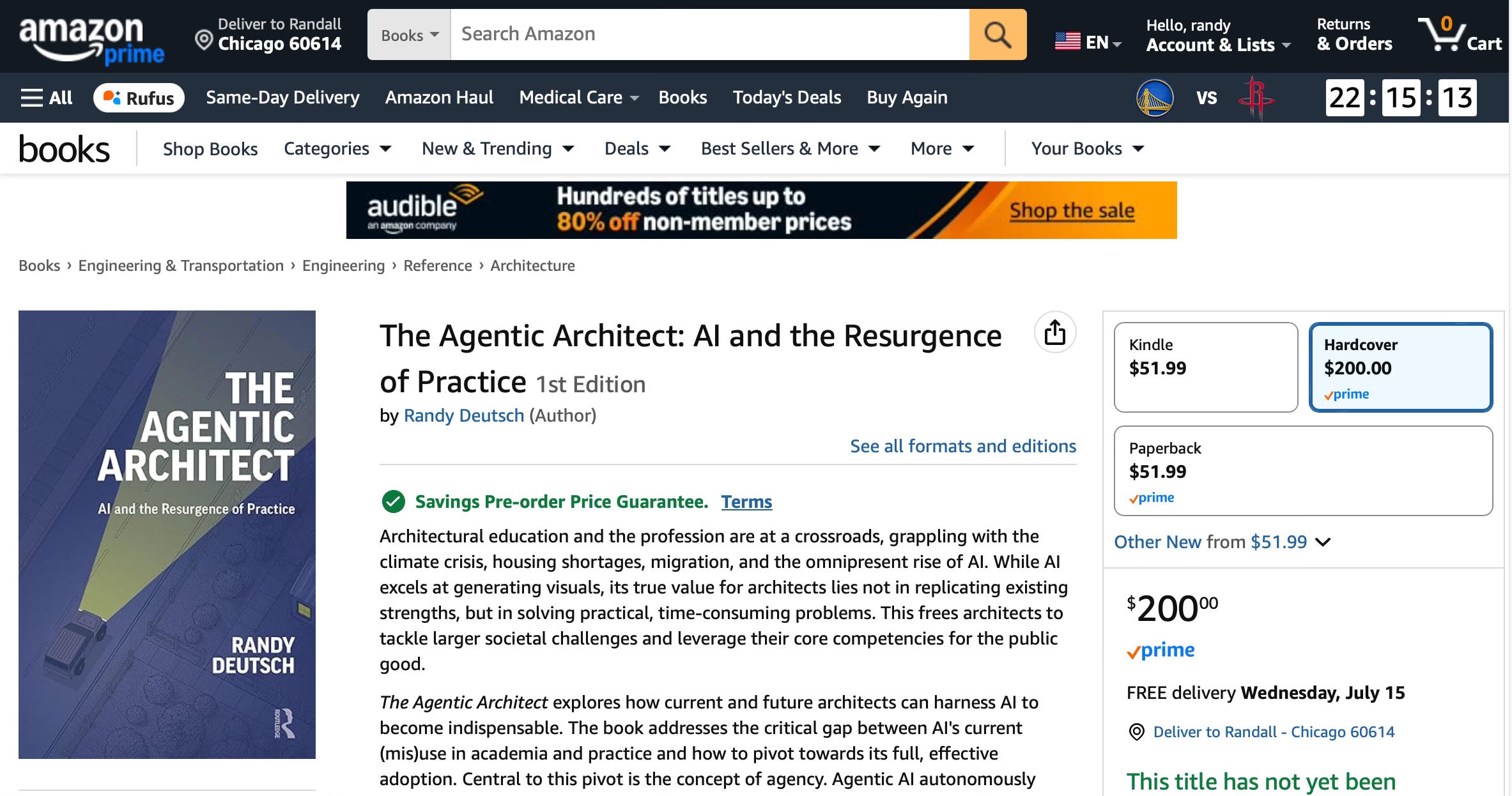
As mentioned, the Kindle edition for my next book is listed as $52.
I have over 7300 Kindle books. The most I have ever spent on a Kindle/e-Book is $25
Until recently I also had 13,200 physical books. Downsizing during the pandemic, I had my adult kids sell them and keep the proceeds which they used that afternoon to purchase and consume gummies.
My library, like Los Angeles’s went up in smoke.
I have yet to meet a human being who will part with $52 for an e-Book.
(If you are out there, please introduce yourself in the Comments and tell me how you do it.)
So, it is not just me. You, dear reader, would be excused if you also raised an eyebrow or two perusing books online only to find a title to be outside your budget. By double.
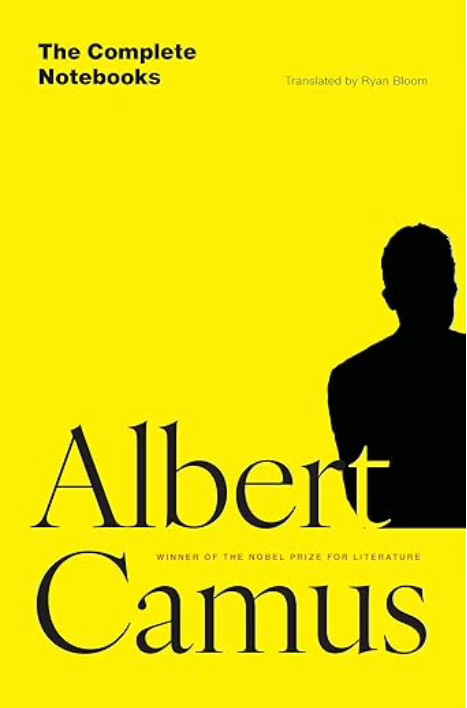
Case in point. I would love to own and read Albert Camus The Complete Note-Books, all 710 pages of them, but can’t get myself to part with $39 for the Kindle edition.
It may look like I am writing on Substack and teaching AI to architecture graduate students, but (and similarly obsessive readers will recognize this in themselves) what I am really doing is patiently waiting in the sidelines for the price of Albert Camus The Complete Note-Books to come down to a more reasonable and accessible price. The rest is gravy.
I do splurge.

It took me a few years to get up the courage to fork over $160 for my all-time favorite book, Matisse/Diebenkorn a gorgeous book that convincingly explores Matisse’s impact on the painter over the course of Richard Diebenkorn’s career.
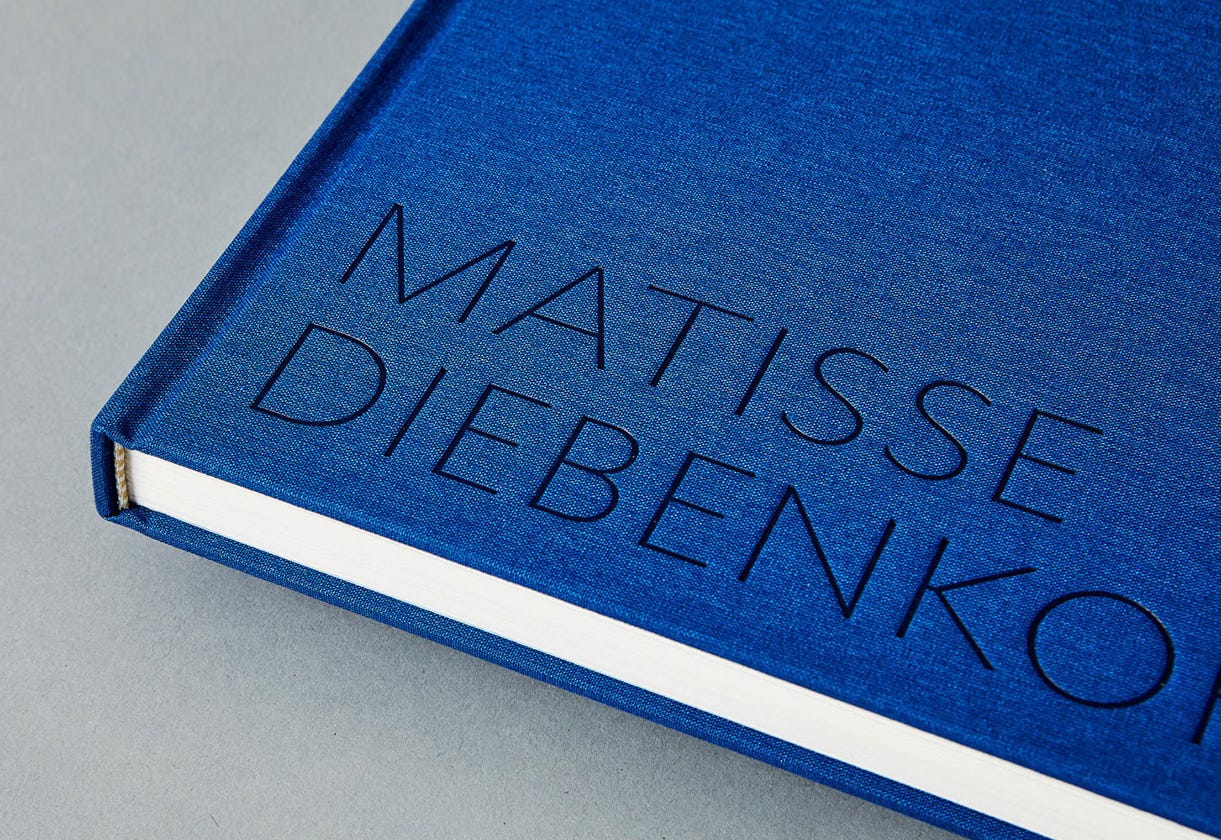
And that font!
The book price literally just increased to $165 while I hovered over the page to get the correct spelling of Diebenkorn. Apparently at $160 it was a steal.
A prized possession at $160, I would go back in to save it in a burning fire.
All of that said, I cannot tell you how hard it is for me to justify spending $25 on a Kindle book.
That is why the $52 Kindle asking price for my upcoming book is so astonishing. And inexplicable.
My Three Fears
Fear #1. Here’s my fear. As the $52 Kindle price is essentially a library/institutional pricing model being imposed on an architectural consumer product, it will cause enormous friction with potential individual buyers aka you.
Publishers know that libraries and institutions will purchase books regardless of price, especially from trusted publishers, so they price hardcovers high to recoup costs during initial release. The $200 hardcover essentially concedes that only institutional budgets will absorb it.
Even allowing for inflation and a professional topic, $52 for a 200-page paperback will strike most buyers as steep compared to comparable titles (even if there aren’t as of now any.)
When I was a playwright before writing a play (see discursive above), I would ask myself:
Why break the silence of the world with your play?
If I had a compelling enough reason, I’d proceed to write.
The fear I have is that the only sound I will hear is the sound of friction.
My fear is that the release of a $200 hardback and $52 paperback and Kindle edition will make nary a sound. Tumbleweeds.
Fear #2. No one, no one I know, will buy and read my book if it is this expensive.
Fear #3. My book sounds like it belongs to the trade nonfiction category (accessible, professional audience, not discursive, easy to read) but is being priced like an academic monograph (narrow scholarly audience, library-dependent sales).
These are two very different markets. The misalignment is going to hurt me with exactly the readers I most want to reach. Namely you (and your inquiring, credit card carrying minion.)
I am of course thrilled that Routledge will be publishing my book in the coming weeks.
I am currently reviewing, editing and signing off on the book proofs and it’s fabulous. My best book yet.
Can’t wait until I am the only one who reads it.
I understand that writing and publishing, in addition to being lucrative careers, is also virtue signaling.
Even if no one buys and reads my book, they will know that I wrote and published one.
It’s good for at least one Substack post, one keynote and one podcast appearance.
The thing is that I wrote this book to be read.
How will it be read if no one can afford to read it?
I am fortunate that mentions of and links to the book are already being shared via mainstream media.
Which I will always be grateful for.
But when your publisher, editor and even the author will not or cannot part with $52 for a paperback or Kindle edition, what gives?
What’s up with that?
My 5 conspiracy theories
You’ll forgive me for having a couple theories why my next book is priced so high.
As a full time academic, I don’t do conspiracy theories but can’t let these pass unmentioned.
Theory 1: Catch and Kill
When a publication kills a story, it is generally referred to as a “killed story”. If the publication specifically buys the rights to a story to prevent it from being published elsewhere (often to suppress it) it’s a catch and kill.
The publisher bought the title so they can squelch it so no other publisher will buy it.
Or, alternatively, to punish me for going to a competitor for my last two books.
Why in my case would the publisher not want the general reading public of architects to learn about their promised salvation by investing in their agency while using AI?
This is as much a mystery to me as their asking price.
Theory 2: People will part with any price for a book
That is, if they feel they’ll benefit from reading it.
People love to read almost as much as they love to rationalize, and everyone can rationalize the price of a book they feel they must have.
They’ll ask, what is the price compared with other similar books? If it’s in the ballpark, they’ll go with it.
Theory 3: Amazon
This is the “let Amazon discount” theory. Us? We’ll take the high road.
Pure Einstein’s theory of gravity. All things must fall.
Including ridiculously overly priced books.
People have over the years said many kind things about my books, but none more like music to my ears than those who have assured me that my book has “retail potential.”
Theory 4: Sell only to libraries and universities
Publishing’s business model isn’t exactly a Silicon Valley get rich quick scheme.
Sell x number of hard copies at any price to libraries and WE WILL BREAK EVEN!
University and academic presses typically invest $30–50k publishing a book and will likely put more into it than they’ll recoup in sales. High prices are how they try to break even. I get that.
Premium pricing signals exclusivity and authority, and it works best when the content is written by an expert, but only if readers can verify that quality before buying by kicking the tires. Most readers don’t get to do that when the new car is in the auto museum.
The publishing folks must know what they are doing because architecture students will be able to read the e-Book via institutional access.
Theory 5: The price of everything is high so why not also your book?
Let’s be clear. I do not think my next book is being singled-out for price gouging exorbitant pricing. Other books from academic publishers are priced equally high or (gasp) even higher.
And it cannot be assumed that editors are in a position to individually lower book prices, even if they wanted to.
I naturally apologized for respectfully questioning the wisdom of my publisher and acquisitions editor (publishing being their business - not mine.)
I am sure there is a reason the book’s price is so high. And like quantum physics there are some things I may just never understand. So, I will stay in my authorial lane.
But I should be excused because I was absolutely in shock at the screenshot below.
And still am.
Cheap…compared to other $52 items
Comparatively, what you might wonder does $52 buy my would-be book readers?
Here are some current comparisons (your mileage may vary)
Food and drink
A dinner for one at a mid-to-upscale restaurant (entrée, one drink, tip)
Two craft cocktails at a hotel bar in a major city
A good bottle of wine at a restaurant (the cheapest bottle at many decent places)
A week of daily specialty coffee drinks (oat milk lattes, etc.)
Two or three Sweetgreen or similar “premium fast casual” lunches
A single round of drinks for two people at a trendy bar in Chicago, NYC, or London
Subscriptions (Substack excluded J) and media
A mid-tier gym membership
A month of Spotify + Netflix + one other streaming service combined
A New Yorker or Economist digital subscription
ChatGPT Plus ($20) + Claude Pro ($20) + leftover change
One month of LinkedIn Premium (actually more expensive, so a bargain comparison)
A single Audible credit plus a few extra purchases
Household and consumer items
A mid-range scented candle (Diptyque, Aesop, etc.)
A bottle of decent whisky or gin
A half-tank of gas for an SUV or truck
One round of dry cleaning for a suit or a few dress shirts
A moderately nice houseplant
Two or three greeting cards with postage (absurdly true; stamps are now $0.78)
Work and professional life
About 20–30 minutes of a mid-market consultant’s or lawyer’s billable time
An airport meal and one drink before a flight
Parking for a day or two in a downtown garage
One Uber or Lyft from the suburbs to the city center
Experiences
Two movie tickets (in a premium format like IMAX or Dolby) with a small popcorn
A single ticket to a mid-tier concert or sporting event
One yoga or Pilates class at a boutique studio
A hardcover bestseller and a coffee (oh, the irony)
You get the idea.
This list isn’t to make my book sound cheap but, by lulling you into a hypnosis state, to make the price feel familiar and acceptable. Your eyelids are getting heavy…
How’s that going?
Not buying it
In my book author dreams, my future reader will spend $52 without thinking about it, working something like this:
$52? You’ll spend this on dinner Friday. Then on Saturday you’ll spend it on a candle that lasts two weeks. My book will last considerably longer and once read, change how you think about work and yourself in the time of AI.
So give up a meal on Friday and read my book!
Or, give up that candle and read my book in the dark!
Something like that.
One more lamebrain scheme idea. Not sure if this is legal or ethical (how’s that for a lead-in?), but authors can purchase their own copies at a 30% author discount (which can be negotiated higher for bulk purchases) so I could buy them out Robin Hood-style then resell them at cost to would-be readers…until I am caught, my books confiscated, except for the copy I read locked up behind prison bars.
To their credit, publishers also share with authors, as standard, a 20% code that can be shared online/distributed via flyers, Substack posts, etc.
And once in a while, publishers will even discount preorder book sales.
Maybe taking 20% off the sale price will help? All April preorders are discounted 20% here
Not fair
From readers’ perspective, the asking price for my next book as it stands isn’t fair by consumer market standards.
A competing AI/professional nonfiction title (entirely hypothetical) by a major trade press will be sitting on the same Amazon page for $17.99 paperback and $12.99 Kindle.
While it won’t be The Agentic Architect: AI and the Resurgence of Practice, not by a long shot, that comparison will be made, consciously or not.
Once the book comes out in a few weeks, I’ll have my work cut out for me.
Professional audiences don’t blink at $52 for a conference workshop, an online course, or a consulting hour. So, one of my jobs is to position the book in that mental category.
Another will be converting skeptics and architects are by definition amiable skeptics.
Thank you for reading.
Who We Need To Be
Totally irrational book-buying and book consuming architectural professionals. Skeptical. But maybe also a little trusting? With cash burning a hole in their wallet.
Theory 6: That's Routledge for you. Seems like every book published by Routledge that I've received from an author (or I've picked up in a bookstore, usually used and therefore well below the cover price) is around $150 for a hardcover and at least $50 for the paperback and ebook, the latter with no discount versus the paperback (outside of no shipping cost), as one might expect when compared with trade books. It doesn't seem to matter if the book has hundreds of color illustrations, like Eric Höweler's latest book ( https://archidose.substack.com/p/what-is-tectonic-imagination ), or just over a dozen b/w illustrations, as in your forthcoming book: the cover prices are basically the same.
This leads me to believe it is simply Routledge's practice that is shaping the cover prices. The hardcovers of their books are geared to libraries and paperbacks/ebooks going to students, and apparently they pay what Routledge deems fair. And while a reduced price for ebooks, or even an open-access model, would make sense, from what I've read here and there online ( https://derekkrissoff.substack.com/p/open-access-publishing-and-the-crisis ), that cost is then shouldered by the author, usually to the sum of thousands of dollars. I know Routledge isn't alone, but their prices compared to other academic publishers in the realm of architecture are noticeably higher—high enough to be prohibitive for people outside of academic to be swayed to buy them, it seems.