Why must everything be transactional and performative?
To win in the game of life, alternate your asks

What I am asking you to do in this post is to have more ask-free experiences.
50% more to be precise. Let me explain.
While we live in a mutual support system that can at times be taxing, demanding and exhausting, try if you can, to mix it up and make our time together a bit more human.
This may come as a shock to some, so trigger warning – you’ve been warned:
Your sponsors, references, recommenders and letter-writers are people, too.
That’s it. Your work is done here. Thank you for reading Who We Need to Be…
For those who read on, along with some venting I’ll share some insights and strategies that may change your life and improve both your luck and career mileage moving forward.
An eye on future usefulness
People have always cultivated mentors, sponsors and patrons with half an eye on future usefulness. Architecture especially, given how tightly it depends on references, Fellows nominating Fellows, and juries who know each other. What’s probably changed in 2026 is less the existence of this behavior and more its visibility and normalization. It’s less taboo to be strategic about relationships now than it might have been in, say, the 1980s, when the going etiquette was to disguise it more.
No one can be bothered to disguise it any more. Nearly every social invitation I receive ultimately results in a request for my writing a letter of recommendation on the person’s behalf or some equivalent.
It doesn’t stop there. Someone will pass through town or ask to stop by my place and it seems they always want something: for me to sponsor them for Fellowship; a letter of recommendation or sponsorship of an award.
These in themselves are part of the territory of being an architect and having served and lived a long life. I am here to encourage and show support.
I get that this is a common problem for people who’ve built a long, visible career. You become a resource, and eventually the resource feels tapped dry at every dinner party.
This post is on how to keep from feeling like you are perpetually tapped dry.
Everything’s transactional
When did life go from just something that happened, one more or less enjoyable lunch, drink, coffee or get-together after another, to a good chance that someone will ask something more of you: a reference, a recommendation letter, help securing a visa?
I remember meeting an architect for breakfast a few years ago in Chicago’s Loop who said he would like to be doing what I do for a living. Literally, it turned out, because I later learned he reached out to my institution and applied for my job. I know this because in my role at the time I unwittingly received his letter.
In another instance, I delivered a lecture to 250 in attendance at the University of Manchester in the UK. Afterwards, a student came up to tell me how much he enjoyed the lecture. That was it. Three months later, he was in the US and emailed me to tell me. Then came the request for recommendations for places to work in the Pacific Northwest. Then did I have any contacts there? Would I put him in contact with them? Would I serve as a reference and recommend him for the position? For the next several years he would regularly email to update me in his visa process as he slowly attempted to become a US citizen. Then came the ask: Working with him and his visa attorney, would I write a letter in his defense? And repeat this process every five years or so as he defended his case as long as I lived?
Kind of makes you think twice about talking to anybody after lectures.
Most engagements to be sure are innocuous. Someone crosses over from the online world into your living room or finds themselves in your neck of the woods and suggests getting together while they’re in town.
Today in fact I’m meeting someone in the profession in the afternoon for a drink in the city. It ought to be casual and fun and probably will be.
Then why do I have a sneaky suspicion that six months from now I will receive an ask: from this person’s case committee head requesting a letter? Or a recommendation as they apply for a position in my program or company?
An ask that traces back to enjoying an innocent beer in one of Chicago’s breweries?
Someone reaches out to meet for a beer and it could be fun but won’t be because I have an inkling I am being worked or being played.
And that is the problem in capsule: where work and play are synonymous.
I suspect they will ask me post-beer or post-coffee in 6-12 months for a letter of recommendation. They will want me to serve as an external evaluator for their promotion or cause. Or they will want me to nominate or sponsor them for an award.
Will you read my 400 page book? Will you co-author the next one with me? Will you write a blurb? Will you endorse it?
And yet work and play are not synonymous. There is a difference between feeling worked and feeling played.
Beer or polite setup?
Feeling worked means you are used for your labor, time or skills, while feeling played means you are tricked or fooled for someone else’s fun, power, or hidden gains.
When I feel like I am being worked I feel like a tool where someone wants my effort, output or money resulting in my feeling tired, drained and used too much.
A friend invites me to an event. I go and enjoy it. Then, a week later comes the call: the ask. Hey, how’s it going? Oh yeah, meant to ask, did you enjoy the event? I know your time is valuable and don’t know what your philanthropic portfolio looks like these days…
Because you can see them coming a mile away, it seems like these asks occur in ever-tightening spirals, where you go from how’s it going to what’s your philanthropic portfolio in seconds flat.
My goal when I awaken every day is to see if I can get through the day without saying no.
Don’t make me say no.
The rule of the “but”
Being played is where I feel deceived, like a pawn in someone’s game; where someone wants to trick me, lie to me, or win power over me, resulting in my feeling foolish, hurt and lied to.
It’s like the word “but” in a sentence. Functionally in human conversation, it acts as a mental spotlight that shifts all weight and focus onto the second half of the sentence.
When people hear feedback or apologies e.g., “You did great, but…” their brains treat the first part as a polite setup and focus entirely on the critique that follows.
It’s like every encounter I have with fellow humans now follows the rule of the “but.”
I vs. thou
It’s a mindset. When you are treating others as recipients, as servants, as future endorsers or letter-writers you are treating them as objects.
The main message of Martin Buber’s I and Thou is that human life is truly meaningful only when we engage in deep, authentic and mutual relationships with others, rather than treating people and the world as mere objects to be used, analyzed, transacted with, as letter-writing machines or controlled.
Buber argues that humans experience the world through two basic word pairs, modes of relation or attitudes, which shape how we exist:
I–It where we treat the other person as an object separate from ourselves. Doing so is admittedly necessary for practical daily survival, science and functioning in society, but can be isolating if it is our only mode.
I–Thou (or I–You) is different, involving a direct, sacred and mutual encounter where both beings meet with their whole selves. Doing so requires no hidden agenda, judgment or desire to gain something, where the two people exist purely in the present moment of shared, authentic connection.
Modern life leaves people lonely and alienated because it overemphasizes the cold “I–It” way of treating the world while neglecting sacred, living encounters.
And this is my main complaint. Too many of my professional engagements and relationships are decidedly I–It in nature.
I am here to serve and given enough advanced notice, so I am not caught off guard, am happy to deliver on your behalf. Full stop.
Just not 24/7.
Your ask is expected. So, relax. Don’t play to type. Don’t be predictable. Don’t be fake. And stop gamifying every moment we spend together.
All day long students will come to my office to have me review or critique their portfolio and CV. So far so good. Then, inevitably in 98% of the cases, they will in the final moment together, as they are packing up their things, ask if I can help them find a job.
The 2% who don’t do this become lifelong friends, people I stay in touch with and enjoy hearing from.
The other 98%? Once they get their job I never hear from them again.
Or at least until the time comes for them to need help finding another job.
The whole system is fraught
I have a friend who only reaches out when they have something to impress me with:
You’ll never guess where I have been! I’m writing from Copenhagen! I went to Martha’s son’s wedding! When they reach out to meet for dinner my wife and I wince a little then brace ourselves because we know it’s just to brag about what they have been up to.
What should they do instead? They could ask a question as innocuous and unpitying as “What are you up to?” Or “Hi, we were just thinking of you and thought it would be nice to get together.”
Not, “We did some interesting things and thought this would be a good time to spring them on you after the fact.” The game, of course, is that they never tell you what they are up to until after the events have transpired. They knew they were going to go to Martha’s son’s wedding when they were with you last, but didn’t tell you until after they went.
Not that any of this is wrong or bad. It’s just performative where my wife and I are reduced to being vessels not humans.
Who are your 7 letter writers?
For AIA Fellowship you need 7 strong letters of recommendation.
Let that sink in. Right now, stop what you’re doing (hopefully still reading this post) and add up how many people you have in your corner who would convincingly and persuasively vouch for you. Who also happen to be especially strong letter writers since your Fellowship case is only as strong as your weakest letter.
That is the moat. And a big ask. That in itself will keep 97-98% of all architects from pursuing and achieving their F.
Fun fact: Fewer than 3% of AIA members are Fellows of the AIA.
How I went for my F is indicative. I never thought of it until the moment it was suggested I go for it. Until the day in 2019 when 2 people on the same day, two people who did not know each other, asked me if I had considered it? I was on the planet at that point for 58 years and on the same day, in two different cities (working in Urbana, and where I live in Chicago 140 miles north), two different people asked me if I was going after Fellowship. I don’t believe in coincidences, so who can say no when something that coincidental happens?
While I had become eligible to go after it 15 years prior, I literally hadn’t thought about pursuing my F until that day. That is the better way. Just do it. Don’t plan and map out your social engagements and communications over the next 2-3 years to get all your ducks in a row.
Because your friends, colleagues and acquaintances don’t like being reminded that they are ducks.
People don’t like to feel like they are being worked or played.

Alternate asks with no reason contact
One of my long-time letter writers – I actually attended his daughter’s wedding last night – hasn’t written a letter on my behalf in 25 years.
Prior to that, he wrote what could only be considered a dream letter it was so over the top. Anything that letter touched, I was granted. He was almost delusional in how supportive he was in the letter. Brilliant letter writer, brilliant letter. That letter got me into places. #gratitude
Then came the day. Looking back, it was inevitable but I didn’t see it coming.
I had one more ask of my friend. I was going after a director position and all he had to do was update the date on his stellar letter and resend it.
His response: No. Never again.
He put his foot down and said no – and he was right to.
He said he felt like our friendship had transformed into his being a letter writing machine on my behalf and he was done doing it. He would have none of it anymore.
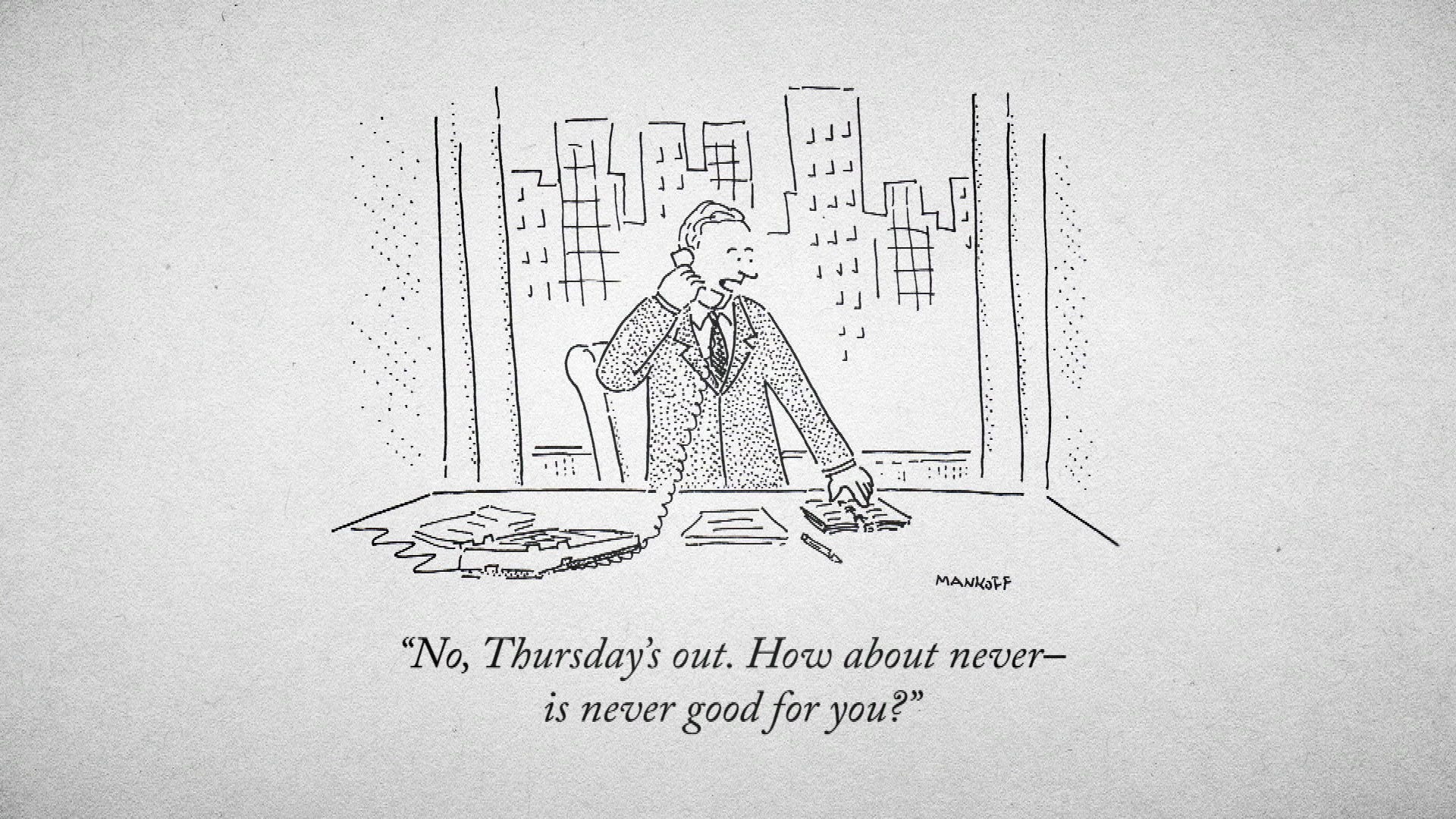
Clear and simple. He quit.
I could no longer count on him serving as a reference. Ouch.
Nobody tells you this. You don’t get 100 tries with someone – you get maybe 3-4 before they start feeling resentful and ghost you. So be selective.
And no, sending them a bottle of your favorite rosé as a thank you each time on demand the monkey performs on your behalf can feel transactional. But I sent you wine!
This is true even if they reuse their previous letters and “all they have to do” is update maybe the date. And who it is addressed to. And the position you are going after. And the salutation. The ask is just too great.
They are the ones who feel manipulated and used. No one likes being made to feel like a duck.
That was quitting, this is being fired
Sometimes, if you are lucky, you later get a peek at the letters your letter writers wrote about you and you realize they aren’t helping your cause. Their letters aren’t as complimentary as you thought, they did a cut/paste job from your LinkedIn profile and didn’t bother to tweak or edit the mix of fonts, or it is clear they couldn’t find enough praise to fill even half of a piece of stationary or digital letterhead about why you are supposedly worthy of the prize or position.
They can no longer be counted on.
They quietly quit your cause, not confrontationally but indirectly by underperforming.
So, you no longer ask them to sing your praises because you realize they never were. They can’t quit. They’ve been fired.
I had keynoted nationally but with Superusers was looking forward to keynoting internationally which I was invited to do just about everywhere but the UK. So I reached out to one of my UK publishers who offered to introduce me to deans of storied colleges, cc’ing me on their missives. The gesture was well-meaning but ultimately ineffective because the email introductions were rushed, riddled with typos, cut-pasted parts of my resume/CV and were half-hearted, not strong endorsements which these things need to be. The recipients were busy deans after all. I ended up speaking several times in the UK but not through this person’s efforts.
The secret of the universe: Alternate the ask
If it starts to feel like whenever someone reaches out, which as one ages can be less frequent, that its usually now for an ask, here’s my advice.
They say in journalism never to bury the lede. But since Substack isn’t journalism per se, at least not the way I practice it, here’s the lede, buried or otherwise:
OK. It’s not really buried because it’s right there in the title of this post (so maybe I am a journalist after all?)
I have been telling my students this for 25 years.
The alternating trick.
It works. This is why I am sharing it with you.
So if it works why has only one student I am aware of in all that time taken me up on it?
Because it’s awkward.
And there is nothing worse in this world in 2026 than to ask someone to do something that they may perceive as being awkward.
They even have a word for it: awkward.
Still, hear me out.
Only one – one – former student has taken me up on it. His name is Wei Yu. Who now has his own firm.
I helped him get a job at AS+GG (where I used to work) and when it came time for him to leave, I helped him get one at Booth Hansen.
He was working at AS+GG when he reached out for a coffee. It turned out, for no reason.
Was it weird? Sure. Awkward? Absolutely.
I kept waiting for the ask and it never came.
He wanted to have coffee to have coffee. Full stop. That’s it.
Did he reach out in the weeks or months ahead with another ask? Sure. But I was heartened that he, my former student, used my methodology, took me up on my suggestion, took my teachings to heart, and so I was primed to help.
Over and over again. Jobs? Awards? Career recognition? Done.
So, alternate your asks. Every other time you meet, meet for no reason. The next time you can ask for something.
Research shows, unless you live in NYC, that someone who helps someone is more likely to help someone in the future.
We are so caught up in pay it forward or the favor economy that we miss out on this important nugget.
People who perform acts of kindness or help others are more likely to engage in prosocial behavior and help again in the future, driven by positive reinforcement, empathy and shifts in self-perception.
Once I help you, I am likely to help you happily and willingly the rest of your life.
Unless you live in NYC where people wait until the person you helped returns the favor.
It’s also just easier to help people who slow down, smell the roses and make you feel like not an automaton or cog in the system, or for that matter a duck, what Joni Mitchell in Free Man in Paris called the music making machine, but instead a human being.
The FAIA machine
What do you get for being an F? You get to help promote others to their F.
Call it the circular economy of F’ing.
Higher Ed is a similar scam system. You get a PhD to have a career in academia so you can teach other PhDs so they can, too in perpetuity. Any questions?
A murder most foul
I have enjoyed serving as a Fellowship and other award sponsor and have received enough feedback from the candidates to know that most of those I have worked with have enjoyed working with me.
Most. Sponsoring is hard because you yourself may be punctual and disciplined, but try telling or reminding the managing partner of a major AEC company that their letter for a candidate, the one they agreed to write three months earlier, the one they never passed along a draft on, is due tomorrow by EOB 5PM EST and there is no indication that said letter exists or even that there is someone at the other end of the email because they have never, not once, responded to any of yours.
Take a deep breath. Your job as a sponsor is to remind the volunteer letter writers as nicely as you can to write their letters and submit on time but here’s the rub: they will hate you for doing so.
If the AIA states that a letter needs to be one page max. and a letter writer – one of seven total letter writers – who never sent you a draft decides to submit a letter that bleeds into a second page?
The candidate is disqualified. The other 6 rule-following, punctual letter writers? Screwed. The entry fee? Forfeited. Being a sponsor is a thankless job.
The aforementioned laggard letter writer will ultimately submit it in time but follow that up by thoughtfully sending you, the sponsor, a copy that looks like it was drafted by an ax murderer, where they stabbed their letter over and over with a bloody knife.
They resent you for having to remind them, a managing principal for g-d’s sake, of a major company, a frigging household name, to submit their letter. No matter how nicely you tell them, and I swear I could not have been nicer in my gentle reminders, they didn’t arrive at their perch in life to be told by someone’s f’ing sponsor to write on command. This actually happened to me. And some version of it happens to me every time I serve as a sponsor.
Would you be my sponsor?
No five words are more triggering to me. Sponsorship trauma ought to be a thing.
And I get it. Writing comes easily to me. I am disciplined (just not maybe always in Substack post length :) Not everybody else is. When I am asked now to sponsor someone the first thought I have is, by agreeing to take this on, who will I alienate this time? And can I live with it? Will it be worth it?
That is the calculous I must undertake every time I am asked to sponsor.
It’s not you. It’s your letter writers who agreed to support your case then dropped the ball and let it out on me.
As mentioned in a previous post, my superpower is to see into people’s futures. I can see people thrive and succeed into the future just by meeting with them today.
If you are a senior undergraduate student and you need to submit 3 letters of support in early January, don’t expect an easy of course when you ask in mid-December.
Mid-October? Of course.
Mid-December? I always tell students to try to find an alternative source but never want to leave them in the lurch. If they can’t find one, I tell them to circle back. By that point, it’s the end of December and the letter is due Jan 2. But they at least tried.
As associate director of our grad program, over 3-4 years I read thousands of letters.
Every one of them. Written by references for undergrads trying to vie into our MArch program.
Most associate directors or enrollment committees read the first and last sentences of these letters. I read them all in their entirety.
I take time to write a great letter. I expect others have as well. You write them like you are the student’s mother. Not just supportive but just short of gushing.
The system is fraught
I am in the time of my life where I am here to support, to champion, others.
Next to compassion, I believe there is nothing more important to dedicate oneself to than generosity: being generous.
But as a sponsor you don’t always deal directly with the Fellowship candidate. Instead, you deal with their marketing machine team.
For years, I presented at AIA Chicago on strategies for attaining Fellowship. The last time before I abdicated my role no architects attended, just their corporate marketing teams. Imagine a wedding where there was no bride or groom, just a wedding planner sitting center stage at the head table. That was what it was like.
Those magazines that feature 30 under 30? That’s allegedly thirty marketing departments who entered, put in the work and submitted on behalf of the candidates.
For once I’d love to see the feature article where in lieu of the winning candidates the thirty marketing teams of the winning candidates were featured .
In several cases where I sponsored for Fellowship, I never met with the candidate. They were too important. To busy. Phoning it in. Instead, I heard from their team.
Six months after receiving their F my building’s valet notifies me that there is a box sent via FedEx for me to pick up. I receive crystal stemware in an oversized box with a bad bottle of wine as a thank you.
I have never seen a self-respecting architect within a mile of crystal stemware.
Team, send the sponsor guy some crystal stemware!
I’ve literally tossed out thank you gifts I received not because the candidates weren’t thoughtful but because the gifts were perfect matches for the impersonal touch-free experience of working with the important yet always unavailable candidates.
Gamifying ambition
Some candidates “draft” letters for their letter-writers. Busy from principals ask for “some bullet points” but what they want in hand is the signature-ready letter. The candidate writes the letter and all the signatory have to do is sign it as their own.
People write books and have a book farm publish them for $19,000 then ask their 25 closest friends and family members to post Amazon reviews, all 5-star, all alike, none with evidence of having read the book (had they, they wouldn’t have given the book 5-stars) and that is it. Done. That is where books and book-promoting campaigns go to die. I know dozens of people who use book farms to write and publish their books .It doesn’t matter if reviewers haven’t read the book. The book isn’t even written yet. Just write the review and. hit send.
On more relational instrumentation
If the exhaustion is mostly social where every breakfast, coffee, lunch and dinner turns into an ask, well-meaning people suggest starting by separating social time from professional asks. That alone, they tell you, does the trick because it removes the on-the-spot pressure that makes these encounters draining.
Worst case scenario there is always the policy paragraph for your email signature, website bio or to send as an automated reply:
Thank you for thinking of me. At this stage in my career, I receive far more requests for letters of recommendation and award or fellowship sponsorship than I can take on, so I’ve had to set a policy: I write letters only for students I’ve taught or worked with directly for at least a semester, and I limit new commitments to roughly 8–10 per year. If your request fits, please send your CV, a short note on what the letter or sponsorship is for, and the deadline, at least 4–6 weeks in advance. I’ll let you know if I’m able to help. If I’m not the right fit, I’m glad to suggest a colleague who might be.
Just the thought of having to go through with something like this makes me want to go into permanent hiding because it is just more transaction and performance when what I want is more life and living.
Whether any of the above is indeed performative is admittedly hard to prove
For sure, professional networking culture has become more instrumentalized via LinkedIn, today’s more visible mechanics of building relationships, career coaching and mentoring that explicitly teaches people to cultivate senior contacts before they need something from them.
I’m even guilty of transmitting much of this in my 25 years of teaching professional practice, literally scripting what our students and future job candidates should say and not say or write and not write to prospective employers to secure both interviews and employment.
Now I’m getting a taste of my own medicine by being the recipient of this relational instrumentation.
And even here, on Substack, I recognize the double standard where I am always telling readers in these posts to cultivate senior contacts before you need something from them.
Just not always with me!
Build a standing process with lead time
As I said, just the thought of initiating any of these processes is exhausting, what I refer to as doing things for things. Not for you, not for people, but for things. Instead of just saying no or writing the letter you come up with a subsystem that depersonalizes your no.
One such instance is where you require a formal request with advanced notice: a resume, a draft of what they want said, and a fixed number of weeks. This filters out casual or last-minute asks and respects your time without you having to personally screen each one.
Instead of deciding case by case, decide how many letters/sponsorships you’ll do per year or per season, and fill that quota on a rolling basis. Once it’s full, everyone after gets the same honest answer.
I have suggested to my students that we should just start each encounter honestly. If the pattern is that every visit or invitation turns into an ask, I can protect the social relationship by identifying it before it even happens. Look, we both know why you are here. Awkward to be sure, but not refusing the meeting, just naming it for what it is.
Students hate this. They tell me it’s a game. They have to set up the meeting during office hours. I look through their materials and comment. They write nothing down. Then, upon leaving, they say oh, one more thing. Boom.
The ask.
The seniority explanation
Seemingly every silicon valley bro is focused on longevity, where they are trying to live forever.
But what they don’t tell you is that if you stick around long enough and you become a gatekeeper.
AIA Fellow, decades of standing, presumably sitting on or near juries and committees…I may just be some guy still in his sweats hammering away at a Substack post but there is no denying I am a gatekeeper now.
That’s not a perception but, notwithstanding the sweats, a fact about my age and position.
Along with architecture I studied rhetoric as both an undergrad and graduate student and spent my career writing plays, books, blogs and now Substack posts.
I am a writer who, with the swipe of my pen, more often than not have scribed letters that have helped get our undergraduate students into Harvard and Yale.
But once you’re that person, every early interaction with someone building a career will carry some asymmetry, because you have something they need. Now I know how it felt every time I hit-up Dan Wheeler FAIA to sing my praises (a belated thanks, Dan.)
That’s not new to this generation. And it’s not something special about me. It’s what happens to every senior person in every field, eventually.
The difference is that when I was not 65 but 35, I was the one reaching out with the ask, and it didn’t sink in to me at the time as an ask, it felt like ambition or admiration or a friendship I was investing in.
From the other end, it looks different. Thirty years hence, it is now clear:
I WAS DRIVING THEM INSANE. (A belated sorry, Dan.)
Go for that untrustworthy beer
Here’s the thing: once you’ve lived through the pattern enough times, coffee (or like this afternoon, beer) itself starts to feel less trustworthy. That’s the cost of the position I’m in. it’s not that everyone is performing (phew, you’re off the hook), it’s that I can no longer easily tell who is, and the vigilance itself is tiring.
Can we just enjoy a beer and leave it at that?
Shame on me assuming instrumentality up front, before it’s demonstrated, because it risks foreclosing the relationships that are still out there, and probably still represent the majority of my engagements.
To my credit, unsuspecting or unwitting students and recent grads are understandably flummoxed when I say no to serving as a reference or sponsor.
It’s not their fault. It’s the 3,700 people that came before them.
Seeing the machine from the inside
Some of this feels like the equivalent of a circular economy.
The circular economy of going for a beer.
What I’m describing here has a name in sociology: social or cultural reproduction.
Or, put more simply, how the sausage is made.
There really needs to be a warning label on the application to become an AIA Fellow.
WARNING: Credentialing systems whether PhD programs, guilds, academies or Fellow designations such as this, are, by design, self-perpetuating. People who benefit from the credential become the ones who confer it. That’s the system’s basic mechanism for maintaining standards, boundaries aka gatekeeping and legitimacy over time. Know what you are getting into by signing on. Deal with it.
A PhD program that reproduces itself is also at its best transmitting standards of rigor, judgment and knowledge that can’t be conferred any other way except through someone who has it vouching for someone who’s earning it.
The same is true of Fellowship in architecture, at least in principle. It’s supposed to certify that this person’s judgment, contribution and ripple effect can be trusted by the public and the profession.
The cynical read that it’s a scam or just a status machine perpetuating itself, and earnest read that it’s how tacit knowledge and trust get transmitted across generations, are both true.
The exhausting part is that I can’t always tell from inside a single ask, which I’m looking at.
I’m literally exhausted just writing that.
I could be on the roof of my building at the pool but I’m here in my Eames lounge chair instead hammering away at my Mac yelling into the void about the fact that you can’t always tell whether coffee is just coffee, or like this afternoon with my visiting contact, beer is just beer.
Deal with it.
Exhaustion, resentment and feeling used
What about the students and colleagues whose growth I’ve helped to shape, and will keep shaping, because I’m good at it and some of them deserve it?
Full withdrawal – throwing out the baby with the bathwater – has a cost, a loss for the honest cases along with the transactional ones.
Is this what’s making me want to quit the system itself?
Or is it the feeling of being used within the system without having chosen my own terms for participating in it?
I’ll let you know after our meeting this afternoon over beer
Who We Need to Be
Go through life. Do good work. Put your heart into it. Find it worthwhile for its own sake. One day, you will be recognized for it. When you are, don’t fight it. Treat it as just one more job you will do well, this time going after an award. Don’t believe your own press. Then, once you receive your F or award or promotion or recognition, pass it along. And remember to go for a coffee just to connect, enjoy another’s company, no strings attached. The strings will take care of themselves.